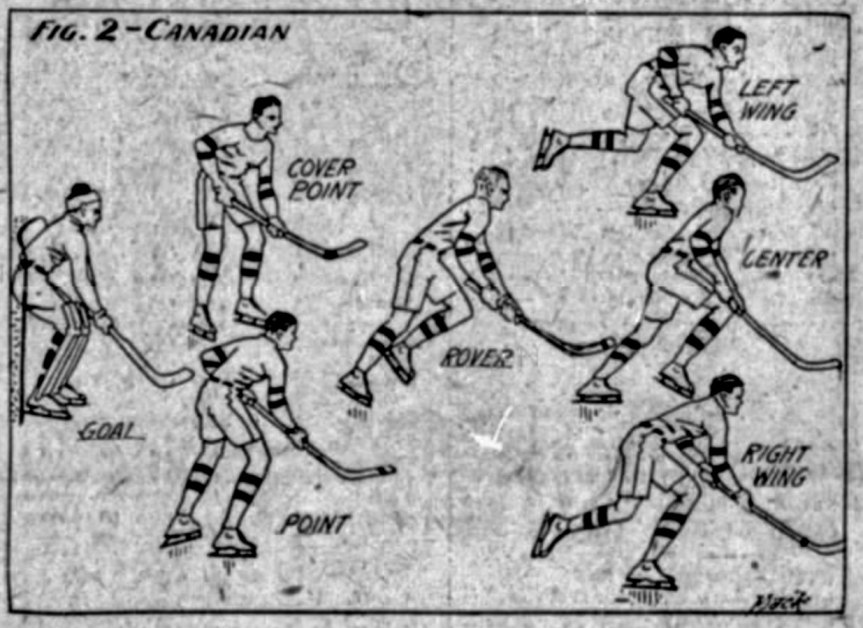
The most apparent thing about hockey is knowing that, besides the goalie, there are five skaters on the ice during even-strength play. Those are three forwards consisting of a center and two wingers, one on each side, and two defensemen, one on each side. But what you may or may not know is that there was a sixth player who played a different position. This was the rover. Flyers fans may recognize that from John Tortorella’s comments about Jamie Drysdale after his debut with the Flyers on January 10 when he said that Drysdale could be a rover. What exactly does that mean? What is a rover? Why isn’t it used anymore?
The History of the Rover Position
At the beginning of the game of hockey in the late 19th century, hockey had seven players on the ice. The rover didn’t have a set position and was generally the fastest and best skater on the team. Rovers would help offensively when needed and went back to help out the defense. Considering the game of hockey was very different even just when the NHL started, the rover position made sense. Forward passing wasn’t allowed which meant that the best way to get the puck down the ice was to skate it and who better to skate it from end to end than the best skater on the team?
As the game of hockey evolved in those early years and became faster along with players becoming more skilled, some leagues started to drop the rover position, most notably the National Hockey Association (NHA, precursor to the NHL). In the 1910s and 20s, the three major ice hockey leagues in North America were the NHA/NHL, Pacific Coast Hockey Association (PCHA), and Western Canada Hockey League (WCHL, later named the Western Hockey League or WHL). Both the PCHA and WCHL used rovers. The PCHA and WCHL would play inter-league play to decide who would play the NHA/L team for the Stanley Cup in the 10s and 20s. During this time in the Stanley Cup Finals, the rover position was treated like the designated hitter in the MLB before they ruled the NL teams would also use it. They would alternate using the rover position and not using it. The PCHA would fold in 1924 and two teams would go to the WCHL, at the time called the WHL, before that league would fold two years later pretty much making the rover position extinct.
The rover position was used at the 1920 Olympic Games, the first Olympic Games to include hockey as an event. This would be the only time the rover position was used at the Olympics.
The Impact and Legacy of the Rover Position
Probably the biggest part of the legacy of the rover is the players enshrined in the Hockey Hall of Fame that played the position. As of right now, and probably forever, there are 16 players inducted into the Hall of Fame who played the rover position. The most notable is probably Lester Patrick who was one of, if not, the most influential figures in hockey history. Other notable rovers include Frank McGee of the inaugural 1945 class, Frederick “Cyclone” Taylor, and Tommy Smith who was the last player to be inducted into the Hall of Fame who played as a rover. He was inducted in 1973.
Today, rover is a not-so-often-used term to talk about defensemen who have great skating ability and who like to join or create a rush up the ice. Some defensemen that fit that include Scott Niedermayer, Bobby Orr, Paul Coffey, Erik Karlsson, and Cale Makar. When the goalie is pulled in a game, the extra attacker that comes out is sometimes referred to as a rover as they generally just go where they’re needed and don’t have a set position.
By Noah Caplan (@Phlyers24)
Photo creds: Boston Globe via Wikipedia
 brotherlypuck.com