The trade deadline is just a week away and fans are starting to get antsy at what the Philadelphia Flyers will or won’t do. Their one-foot-in-one-foot-out tightrope between attempting (and failing) to make the postseason and their frail attempts at a proper rebuild have made the fog of war surrounding the Flyers at the deadline interesting.
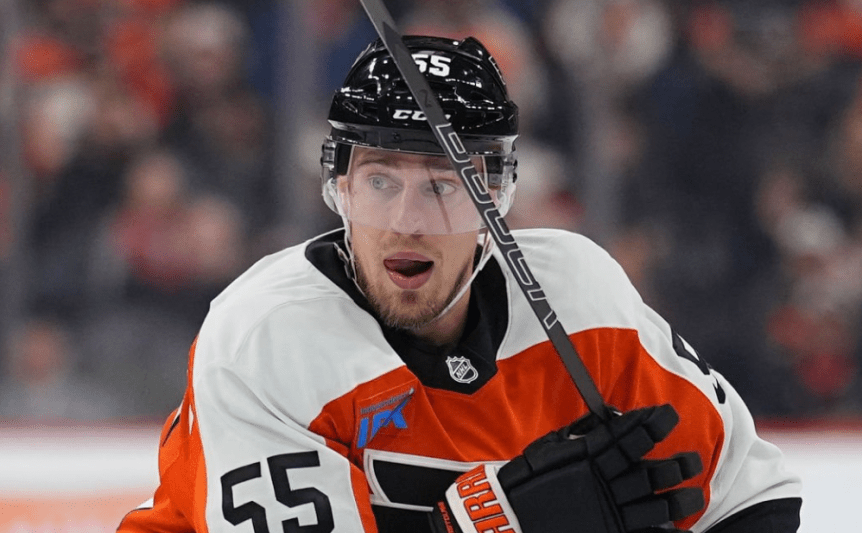
The two big names the Flyers are looking to potentially deal away are Scott Laughton and Rasmus Ristolainen. Laughton has been on the trade block for literal years now, while the Flyers theoretically should be using Ristolainen’s improved play as an opportunity to ditch the term left on his contract and maybe pick up an asset or two for doing so.
But it’s the Flyers, they haven’t exactly had that killer instinct when it comes to capitalizing on trades in the last… ya know… decade. And the front office’s inability to step up to the plate has left a bad example for a fanbase that doesn’t seem to have a great concept of what “when to hold ’em and when to fold ’em” actually means.
Sure, you want the Flyers to get the highest value for their trade assets, but putting unrealistic price tags on players and refusing to budge from that and thus just retaining the same players and running back an identical roster for a third straight year is definitely not ideal, as we should’ve realized this season.
I’d argue not trading players because they’re desperate to get a maximum value that just isn’t there and chalking it up to “asset management” is the antithesis of what that phrase is supposed to mean.
There are only 31 other teams in the NHL. If the Flyers put a valuation of, say, two first round picks on Rasmus Ristolainen then go door to door and one by one get told “no,” then Ristolainen isn’t worth two first round picks.
We’ve seen them play this game with Scott Laughton for the last few years. They want a specific price for their asset, but no team has stepped up to the plate, so they just don’t trade him.
Then the question becomes what do the Flyers gain by not trading their player? Laughton has lingered on the roster and his value has depreciated quite a bit over the last two years compared to where it was during the 2022 offseason and now if they try to move him, there’s little chance they’d even get close to his former offers let alone the original multiple top picks they wanted.
Much like Laughton, the term on Ristolainen’s contract makes him a player that wouldn’t typically get dealt at the deadline, but if teams interested in his services all offer similar prices, none of which are what the Flyers expected, then they just need to consider selling him at whatever price the market determines he’s worth.
Waiting until the offseason does allow for more teams to come to the table when cap space is a bit easier to move, but if the teams most desperate for him like Edmonton, Winnipeg or Dallas aren’t willing to pay a premium when it’s most critical at the deadline, chances are his overall perceived value won’t skyrocket during the summer.
So let’s apply the same question- what value do the maintain by keeping Rasmus Ristolainen on the roster? He’ll turn 31 later in 2025 and has two years left on his contract at a $5.1 mil AAV. The Flyers are on pace to miss the playoffs for a fifth consecutive season, and barring a massive roster overhaul (which not selling their current players limits) it’s going to be an uphill fight next season as well.
Briere has talked about adding size on the blue line, which is a box Ristolainen definitely checks, but at this point the question of whether Ristolainen will even be here (or be young enough to be useful) when the Flyers are truly ready to compete again needs to be asked. He’s not a spring chicken anymore. He’s got 12 years and nearly 800 games under his belt and on the wrong side of 30, the fact he was able to blossom later in his career at all is a minor miracle, let alone expecting his to keep getting better with age.
They’re essentially holding onto him just for the sake of holding onto him. They don’t need to trade him at the deadline given he as term left, but when talking about “asset management,” stalling isn’t a good thing. It backlogs internal roster changes (like keeping Emil Andrae in the AHL forever) and they risk Ristolainen’s value falling the longer they wait.
If the market says Ristolainen is worth just a second round pick, then that’s what he’s worth. And the Flyers have to decide whether or not they value change more than they value the role Ristolainen brings to the table in the hopes of magically increased value at an undefined time in the future.
This is the kind of situation at a deadline that can make or break a GM, and Danny Briere doesn’t exactly have a strong track record of rising to the occasion. In fact, before the Frost & Farabee trade, the pressure surrounding his inaction was starting to reach a boiling point and if the deadline comes and goes and nothing of note happens, Briere may once again be thrown back into the deep end of the court of public opinion.
By: Dan Esche (@DanTheFlyeraFan)
photo credit: Getty Images
 brotherlypuck.com